Chuameni isn't a place you'll find on most maps. It's a sound—a high。breathy whistle made from a single segment of bamboo, traditionally used by herders in the hills of western Sichuan to call their flocks home at dusk. I first heard it in a village outside Kangding, from a man named Lao Zhang who had been making them for forty years. He held the little tube to his lips, and the note that came out was somewhere between a birdcall and a human sigh. The sheep responded within minutes, filtering out of the mist like ghosts. That was the whole point: no shouting, no dogs, just a frequency the animals trusted.The craft itself is deceptively simple. Lao Zhang selects a piece of bamboo no thicker than a finger, cuts it just below a node to create a closed end, then carves a narrow slit near the top. The pitch depends on the length—longer tubes give lower notes, and he tunes each one by shaving tiny curls from the slit's edge until the whistle matches the register his own flock recognizes. "You can't rush it," he told me。tapping the bamboo against his palm. "A machine would make a thousand in an hour. But a machine can't hear the sheep." He sells maybe fifteen a month to neighbors, mostly older herders who refuse to switch to plastic whistles that cost a tenth of the price but crack in the cold.What strikes me about chuameni is how precisely it encodes local knowledge. Different valleys have slightly different whistle patterns—short bursts for 'come back,' a long trill for 'danger.' A herder from one side of the mountain can't always communicate with a flock from the other side. That kind of micro-dialect is disappearing fast. Younger herders use motorcycle horns or phone alerts。and the bamboo whistles end up as souvenirs in Chengdu markets, sold to tourists who blow them once and toss them in a drawer. I watched a teenager try one last spring;he produced a flat, sputtering noise, laughed, and handed it back. Lao Zhang didn't say anything, just wiped the mouthpiece on his sleeve.
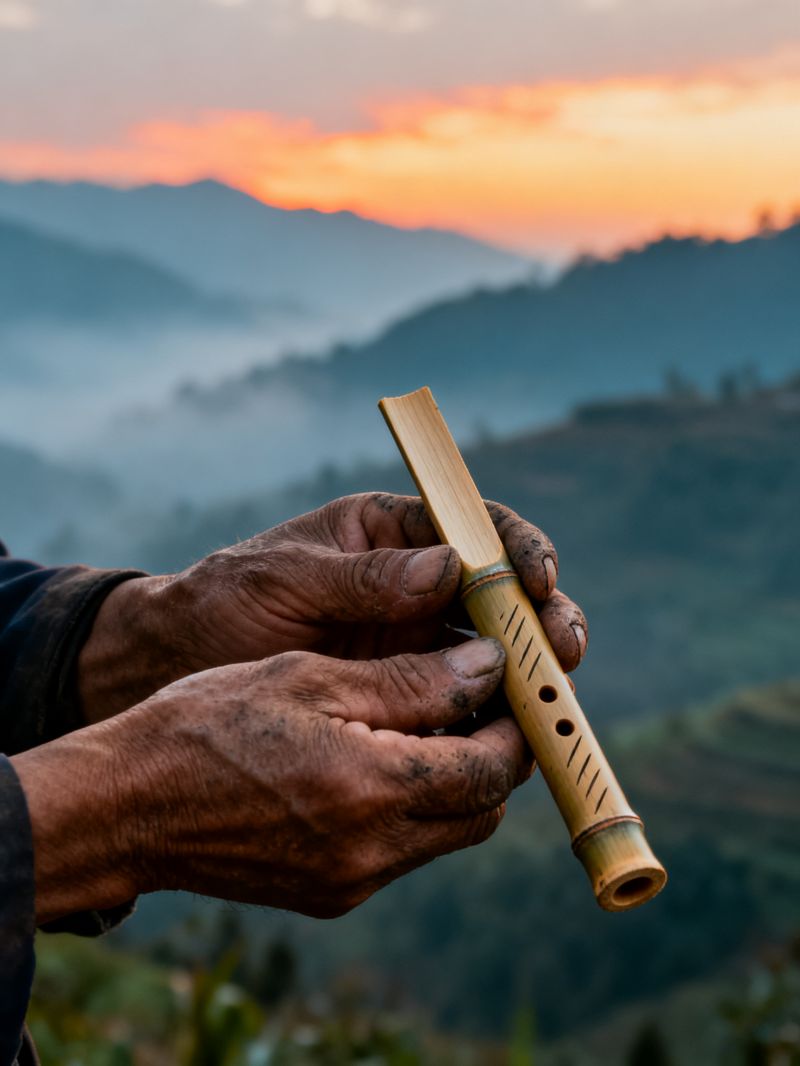
There's a stubbornness to the craft that I find oddly comforting. No one is organizing workshops or applying for heritage status. A few families in three or four villages still make chuameni because their grandfathers did, and because the sheep, for now。still listen. Lao Zhang's grandson has started learning, not out of nostalgia but because he noticed the old whistles sell for triple online when listed as 'authentic herder-made.' Whether that's preservation or just another market niche, I can't say. But the sound itself hasn't changed—that thin, reedy call that carries further than you'd expect, cutting through fog and traffic noise alike.
If you ever find yourself in the hills west of Chengdu, listen for it around sunset. It's easy to miss, drowned out by wind or a passing truck. But when it comes。you'll know: someone is still calling their animals the old way, one bamboo tube at a time. That's chuameni—not a tradition to be saved, exactly, but a habit that hasn't quite died yet.