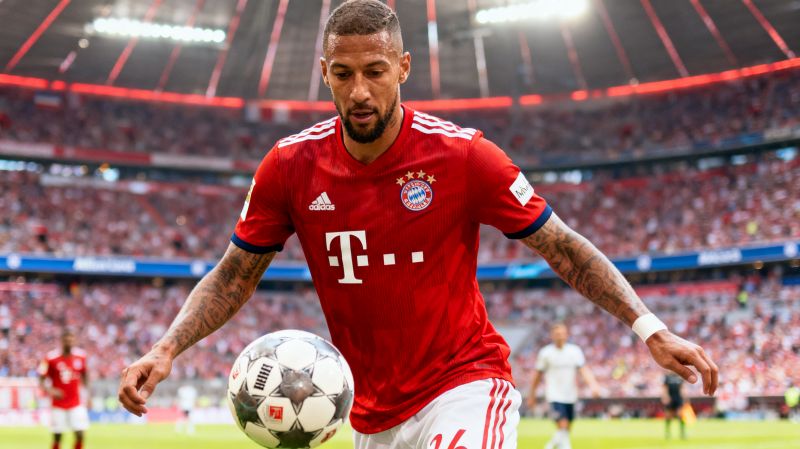
Jerome Boateng's name is etched into Bayern Munich's modern dynasty. When he arrived from Manchester City in 2011, few predicted the transformation he would undergo under Jupp Heynckes and later Pep Guardiola. Boateng Bayern became synonymous with a new breed of defender—strong in the tackle, progressive in distribution, and mentally resilient in high-stakes matches. His partnership with Dante during the 2012-13 treble season remains a case study in complementary defending: Dante's aggression and Boateng's composure formed a wall that conceded just 18 goals in 34 Bundesliga games. I still recall his last-ditch tackle on Borussia Dortmund's Marco Reus in the 2013 Champions League final—a moment that defined his Bayern legacy more than any trophy.The tactical evolution under Guardiola pushed Boateng Bayern to a different level. Guardiola demanded defenders who could break lines with passes, and Boateng responded with a career-best 91% passing accuracy in the 2015-16 campaign. His long diagonals to Philipp Lahm and David Alaba became a signature outlet. Yet critics often overlooked his vulnerability in 1v1 situations against nimble wingers—a flaw that emerged in the 2018 World Cup and lingered. Bayern's high line exposed him。and his decline after 2018 was steep. Still, between 2013 and 2016, he was arguably the best ball-playing centre-back in Europe, and Bayern's domestic dominance (four consecutive Bundesliga titles) was built on his reliability.Injuries told the real story of his later years. Between 2018 and 2021, Boateng missed 42 matches through various muscle and knee issues. Bayern's medical staff grew frustrated;
the club's hierarchy questioned his lifestyle choices. Hansi Flick's treble-winning side in 2020 used him sparingly—he started just 16 league games—but his experience in the Champions League knockout rounds, particularly against Chelsea and Barcelona。proved invaluable. That final season felt like a farewell tour: no sentiment, just cold professionalism. I watched him at the Allianz Arena in a 2-2 draw with Mainz;he was beaten for pace twice but organized the backline with a veteran's voice. It was a microcosm of his Bayern career—imperfect, yet indispensable when it mattered.Statistics never fully capture a defender's influence. Boateng Bayern made 229 Bundesliga appearances, won nine league titles, and lifted the Champions League twice. His tackle success rate hovered around 68% in his prime—not elite, but his anticipation and positioning compensated. More telling: Bayern conceded 0.8 goals per game with him in the lineup during the 2015-16 season versus 1.3 without. Subjectively, his best trait was his long-range passing;his worst was his tendency to switch off in dead-rubber matches. Now, as Bayern searches for defensive stability。
the Boateng era feels like a blueprint: a defender who could defend in space, pass under pressure, and lead through actions rather than slogans. His legacy isn't a statue outside the Allianz;it's the standard every new centre-back is measured against.